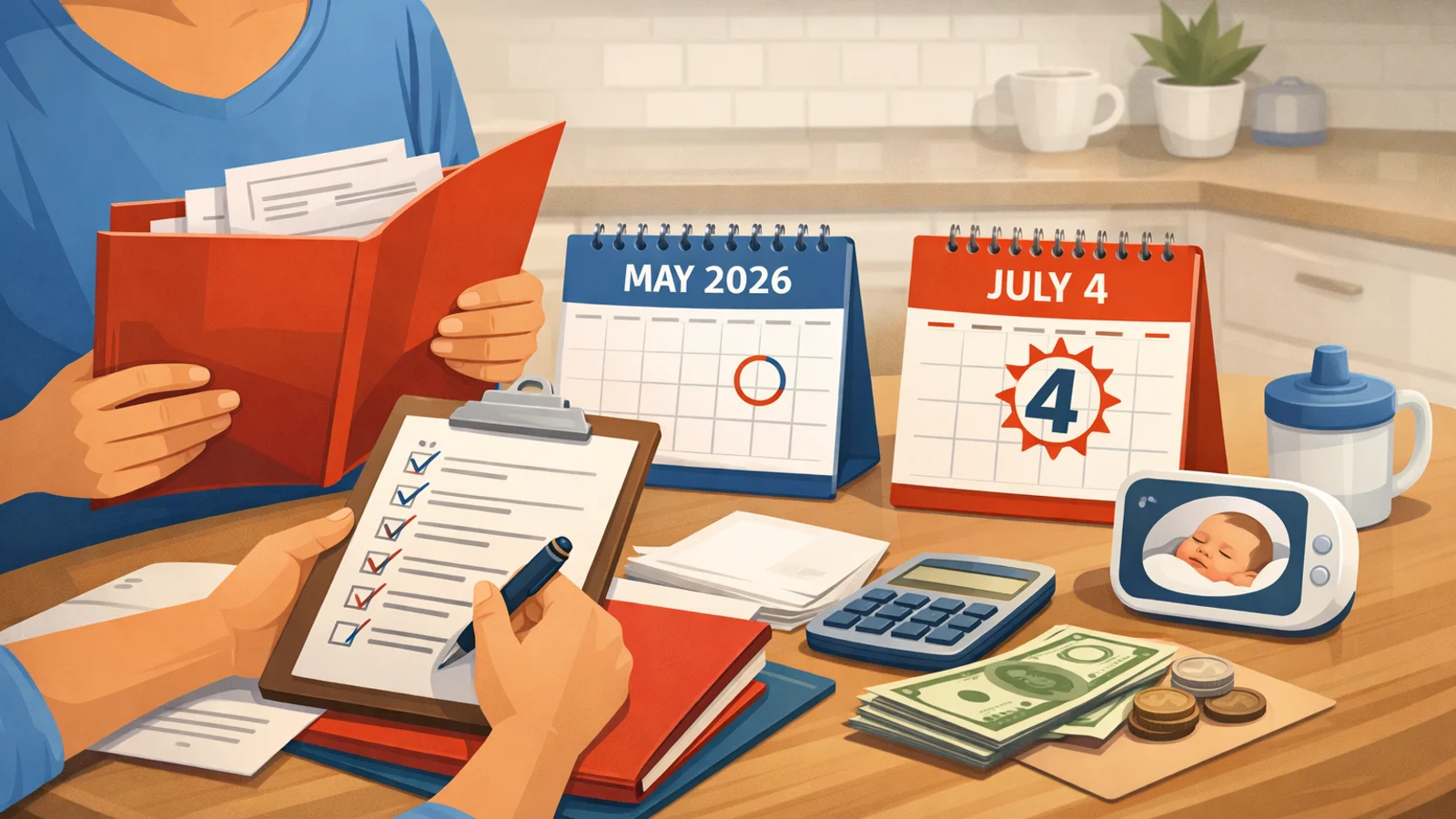
Parents have been seeing the same questions come up again and again in early 2026: When do these accounts actually start? What should we do now? And what can families realistically prepare before money can go in?
Here is the practical version.
Trump Baby Fund is a private informational brand for parents tracking the rollout of the new child savings account program often referred to publicly as “Trump Accounts.” As of Thursday, March 19, 2026, the main dates parents should keep in mind are:
- Activation notices are expected around May 2026
- Contributions are expected to begin on July 4, 2026
- Public reporting has also described IRS sign-up activity and Form 4547-related processing ahead of the July contribution start, while fuller contribution activity begins in July 2026. (trumpbabyfund.com)
The biggest parent question right now: should you do anything before July 4, 2026?
Yes — but the right move is preparation, not rushing money into the wrong account.
As of March 19, 2026, public information indicates that contributions are not scheduled to start until July 4, 2026, even though parents may see earlier notices, sign-up steps, or paperwork tied to account activation. That means this spring is best used for document gathering, identity checks, and deciding how this account fits alongside your other savings priorities. (trumpbabyfund.com)
What parents should compare right now
If your household is trying to plan ahead, compare these four questions:
1. Are you preparing for activation, or for funding?
Those are not the same step.
- Activation is the setup phase, with notices expected around May 2026
- Funding is when contributions are expected to start on July 4, 2026
That distinction matters because many parents assume they need to deposit money immediately once they hear about the program. Current public information suggests the more realistic timeline is setup first, funding second. (trumpbabyfund.com)
2. Is this your only child-savings tool?
For many families, the answer will be no.
Some coverage has noted that if your goal is specifically education saving, a 529 plan may still be worth comparing with this newer account structure. That does not mean one option is automatically better for every family. It means parents should compare purpose, flexibility, timing, contribution rules, and how each account fits into the rest of the household budget. (nbcchicago.com)
3. Are you focused on eligibility, or on convenience?
A lot of confusion comes from mixing those two ideas.
Parents usually want to know whether a child may qualify for the program’s initial government-backed benefit, but they also want the easiest setup path. Public reporting has described a $1,000 benefit for eligible newborns tied to account opening, while later contributions can also come from family, friends, or employers under the program framework. Families should treat those as separate planning questions and verify details as official account materials are released. (apnews.com)
4. Are you waiting on the perfect answer?
That can slow families down.
You do not need every future rule settled before getting organized. What you need now is a short checklist and a calendar reminder for the actual rollout window.
A practical March-to-July 2026 checklist for parents
If you want a simple plan, use this:
Do in March and April 2026
- Confirm the child’s legal name exactly matches official records
- Make sure the parent or guardian has current government ID
- Gather birth records, Social Security information, and mailing details in one place
- Review your current savings setup so you know whether this account would be an add-on or a primary child-savings account
- Decide who in the family will monitor activation notices and deadlines
Do around May 2026
- Watch for activation notices and setup instructions
- Read the account-opening steps carefully before submitting anything
- Save copies of every confirmation screen, letter, or form
- If a tax preparer, payroll team, or plan administrator is involved, ask what they will need from you
Do before July 4, 2026
- Decide your starting contribution amount in advance
- Set a monthly family budget number you can actually maintain
- If grandparents or relatives want to help, give them one coordinated plan instead of multiple informal gifts
- Avoid overcommitting before you know the final operating details for your specific account provider or administrator
Do starting July 4, 2026
- Make the first planned contribution if the account is active and ready
- Track every deposit
- Recheck annual limits and contribution rules before sending larger amounts
- Keep expectations realistic: this is a long-term savings tool, not instant cash for current bills
Current Treasury materials and reporting indicate that family, friends, and employers may be able to contribute, with public statements also referencing an annual contribution cap structure beginning July 4, 2026. (home.treasury.gov)
New developments parents are watching in 2026
Two developments have made this rollout more active than many parents expected.
First, national coverage has highlighted private philanthropic commitments tied to the broader program, including highly publicized pledges intended to support additional deposits for some children outside the basic federal seed structure. Second, coverage suggests the program is being discussed under multiple labels in public conversation, which can make research harder for parents trying to follow updates. (home.treasury.gov)
The practical takeaway: if you are searching online, do not rely on one phrase only. You may see the same rollout discussed under “Trump Accounts,” “530A accounts,” or related child savings language. (axios.com)
Common mistakes to avoid this spring
- Assuming May 2026 is the contribution start date
- Assuming every child is treated the same without checking current public eligibility language
- Opening unrelated products too quickly because the names sound similar
- Treating headlines as full instructions
- Expecting guaranteed growth, guaranteed tax outcomes, or guaranteed long-term value
That last point is important. A child savings account can be useful, but outcomes depend on future rules, investment performance, fees, family contribution patterns, and account administration. Parents should avoid promises that sound too certain.
A simple way to think about the next few months
From March 19, 2026 through late spring, the smartest move for most families is to stay organized and wait for the rollout sequence:
- Prepare documents now
- Watch for activation around May 2026
- Plan contributions for July 4, 2026 and after
That approach is calmer, more accurate, and less likely to create account-opening mistakes.
Trump Baby Fund will continue tracking parent questions around setup timing, contribution start dates, and how families can prepare without overcomplicating the process.